Some things can change. Some things should remain.
This did not begin as a company. It began as a house with a lot of wood in it.
Our family is from a small village in South India, and our father has always worked with wood. Not as a hobby he took up — as the thing he understands. The house we grew up in was filled with furniture he had a hand in: a cupboard, a dining table, a sofa, beds.
I was around five years old when most of it arrived. I am twenty-nine now. Much of that furniture is still in daily use — roughly twenty-four or twenty-five years later, through several homes in different cities, packed and unpacked and moved again. It is still sturdy, still works, and still looks like something you would want in a room.
That is not a small thing. Most furniture bought in that period has been replaced two or three times over.
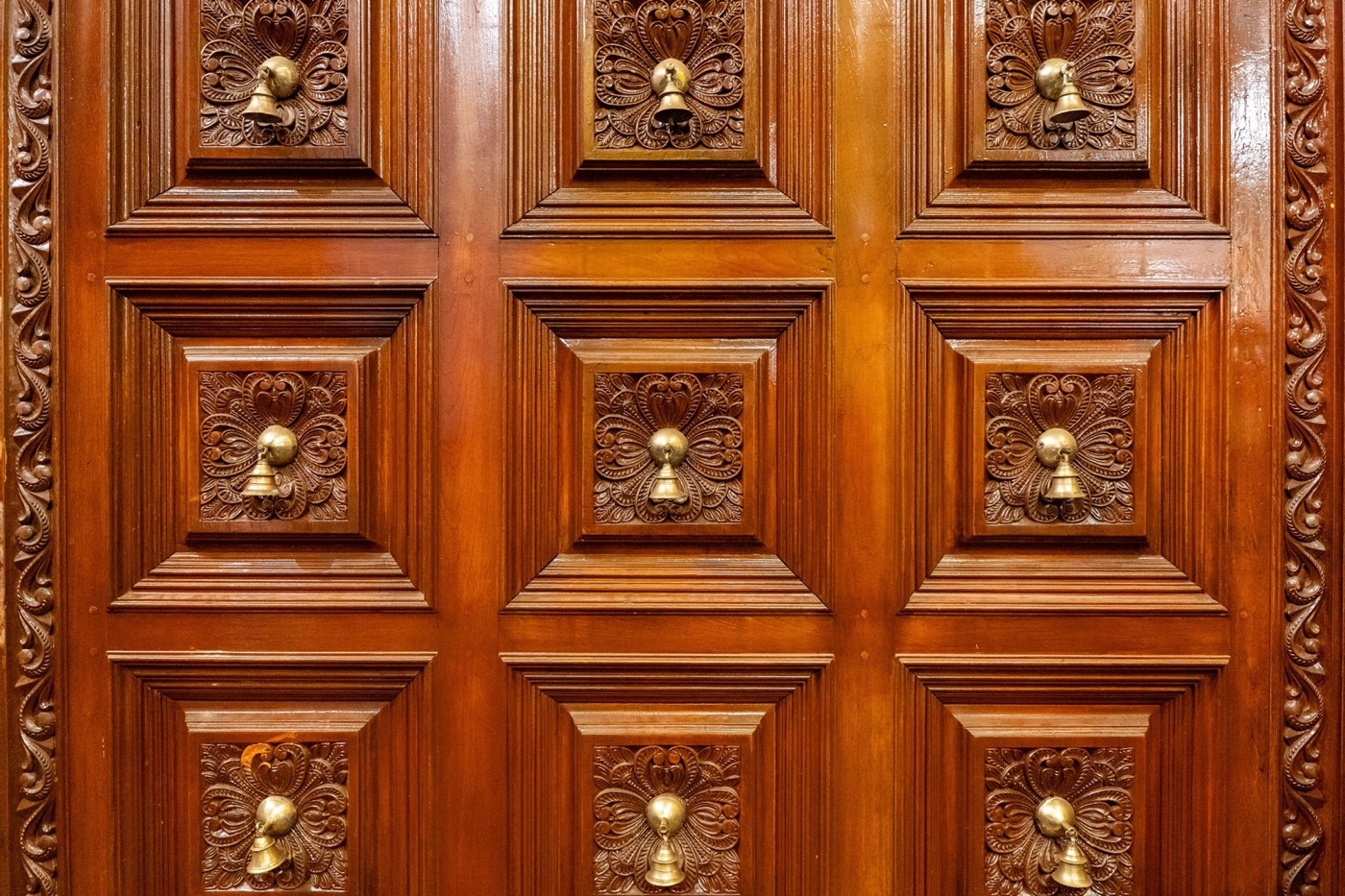
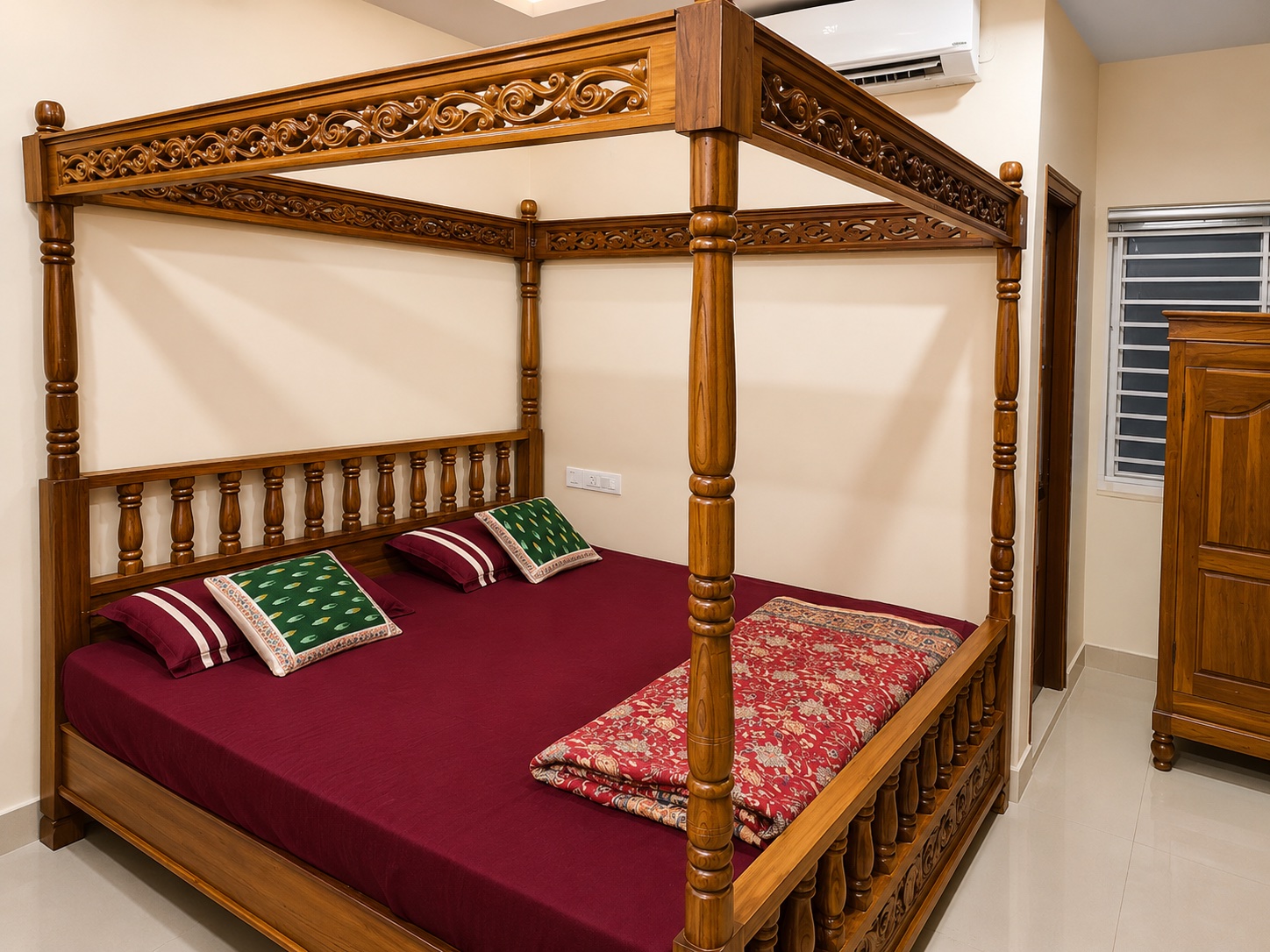
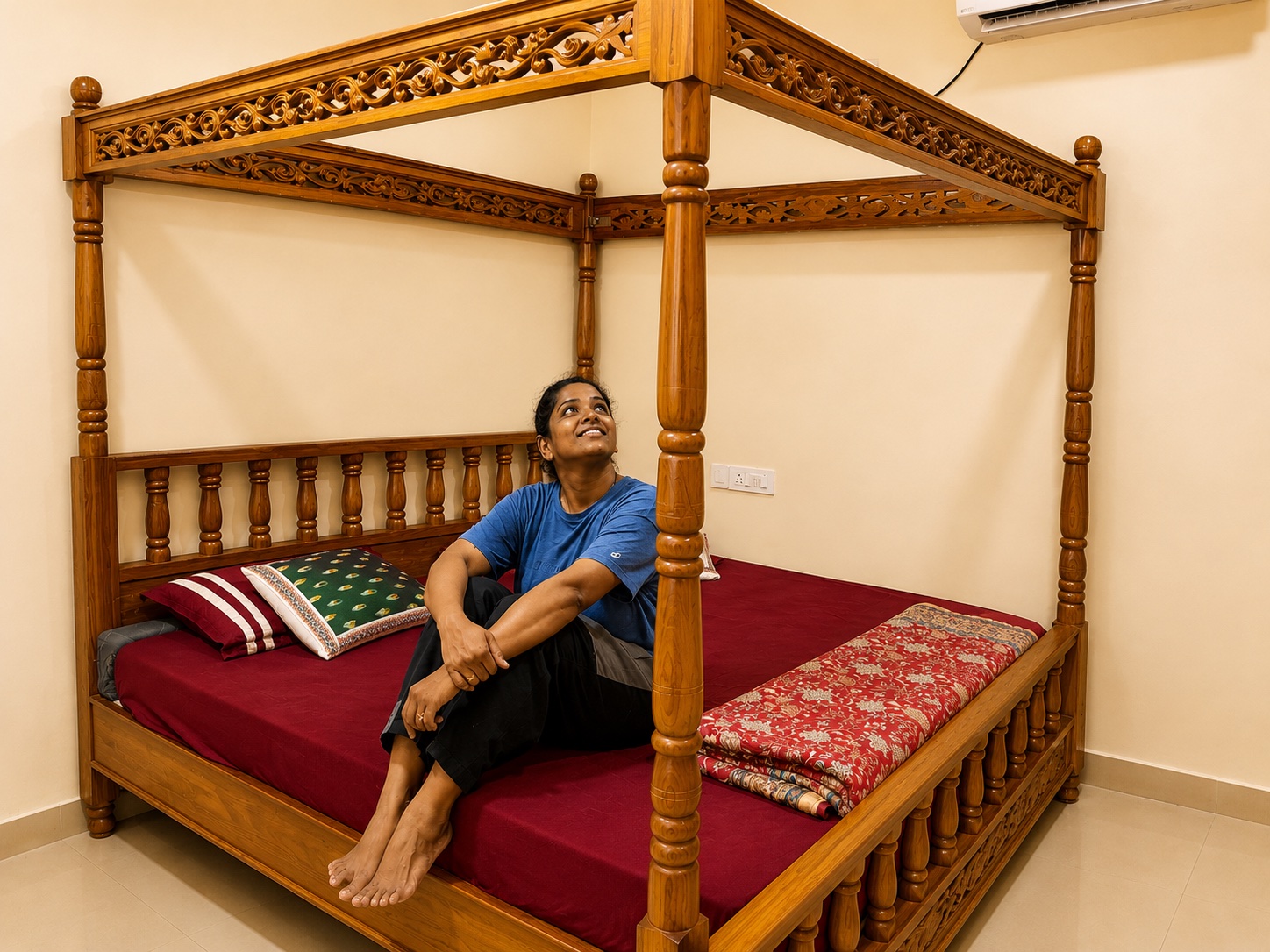
People who came to the house noticed. They would ask where a piece came from, and then ask whether he could make one. So he did — for friends, for relatives, for people they knew. That went on for years, entirely by word of mouth. No shop, no website, no catalogue. Somebody would visit, see something, and ask.
Somewhere in there a question started to nag. If this kind of furniture had become genuinely hard to find — and it had — why was it only reaching people who happened to walk into one particular house?
Rooted Spaces is the answer to that question.
The person who knows.
Our father oversees the work. His experience is not only in furniture — it runs through construction and interiors as well, which is why those two sides of the business sit together rather than one being an afterthought of the other. He is the reason we can talk about a door frame and a dining table in the same conversation.
Around him is a group of people who handle different stages of the work. Several of them have been associated with it for more than ten years. That continuity is most of why quality holds from one job to the next, and it is the thing about this business that is hardest to copy and easiest to lose.
We have deliberately not put numbers on this page — how many people, how many years, how many projects. When we can state them accurately we will. Until then they are left out rather than estimated.
Furniture outlives the reason you bought it.
A table gets bought for a flat and ends up in a house. A bed made for a child gets slept in by an adult. The piece stops being a purchase quite quickly and starts being part of where a family lives — and then it either holds up for decades or it does not.
That is the whole argument. Not that our furniture is luxurious, or exclusive, or crafted to perfection. Just that it is made properly enough to still be there when it has stopped being new, and that somebody thought about how it would be used before they built it.
We would rather talk than sell you something.
This has always worked as a conversation. Tell us what you need and we will tell you what it takes — including when the answer is that you do not need us.